** When you buy products through the links on our site, we may earn a commission that supports NRA's mission to protect, preserve and defend the Second Amendment. **
“Did you ever stop to think that without the work done between 1871 and 1902 by the N.R.A. that there would be no such [National] matches?”
—Excerpt from the 1924 National Match Program
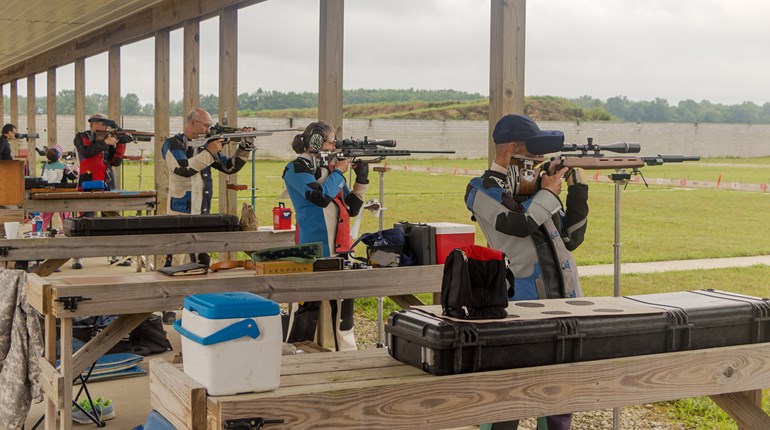
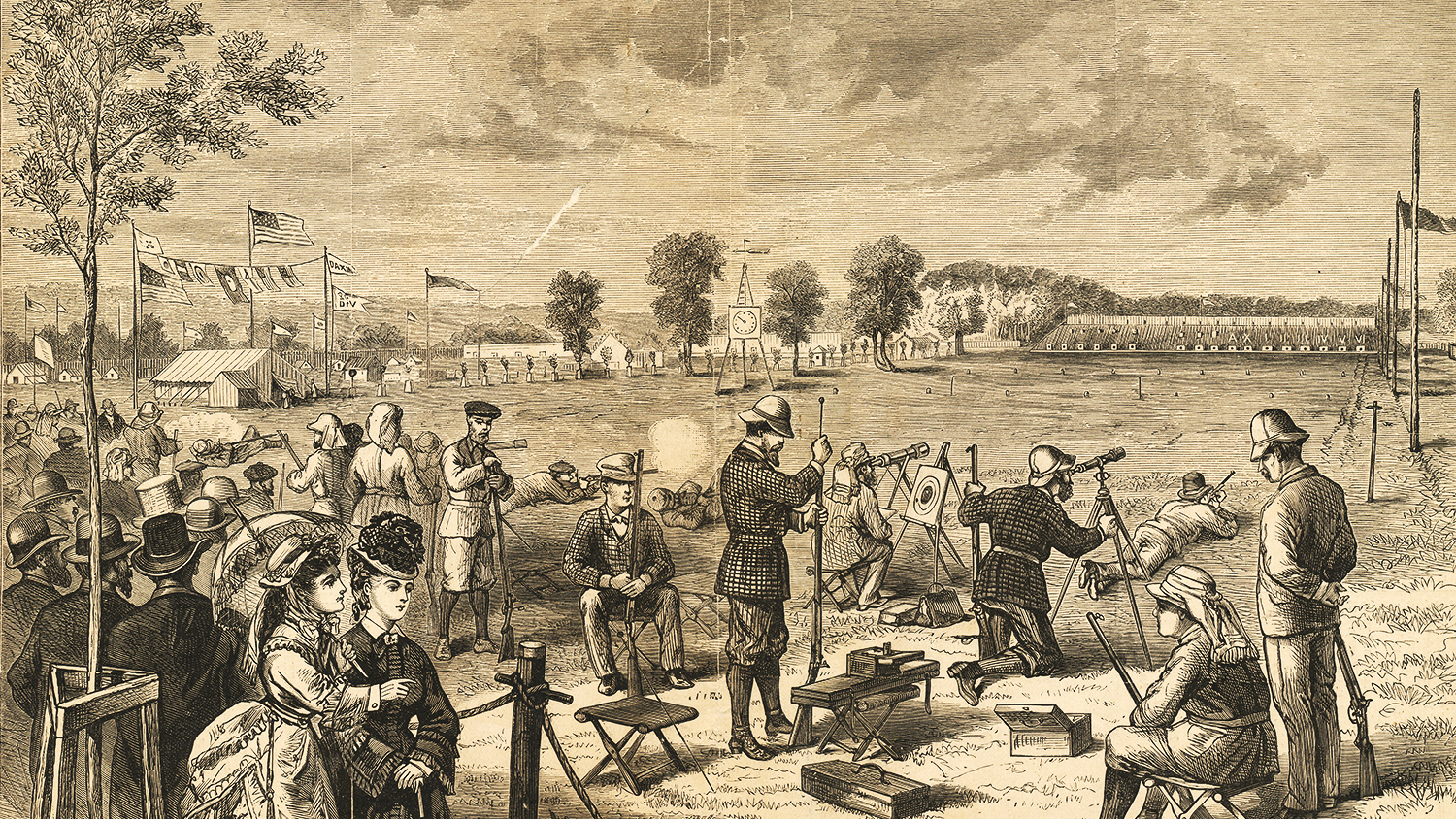
The NRA conducted its first match at the range in Creedmoor, NY, in 1873. At the time, the only competition was high power, offered in four events—200 yards standing with the military rifle, 200 yards standing with “any rifle,” a regimental team match and a 100-yard standing rapid fire match. This competition was open only to military personnel.
The NRA organized its first annual match later that year, which ultimately became the National Matches. While the first interest of the organization was long range and military shooting, it was soon realized there was much more interest in the sport, so the NRA added Schuetzen matches and permitted civilian entries in 1895.
The NRA was relatively dormant during the mid-to-late 1890s. By 1900, New Jersey’s Sea Girt Range was flourishing and its success, coupled with the embarrassment caused by weak U.S. marksmanship in the Spanish-American War two years earlier, played critical roles in revealing the need for a national shooting organization. Efforts to create a new national shooting organization were set aside in order to revamp the NRA into the model of national representation it was destined to become.
One of the founders of the NRA, Gen. George W. Wingate reminded those involved in the opposition movement, led by future NRA Secretary Albert S. Jones, that the NRA’s history was that of competitive shooting and military training in the United States. Wingate urged the reorganization of the inactive NRA. He also emphasized that the NRA created the blueprint for annual matches, which, among other things, profiled a system of marksmanship qualifications used by both civilian and military shooters. Wingate’s successful appeal was grounded in his conviction that the Association’s revival was indisputable, logical and necessary.
Officially, the first National Matches were fired at Sea Girt in 1903 when they were mandated by Congress the year before through the Army Appropriations Bill. It would be remiss, however, to understate the innovative and resourceful role the National Rifle Association played in marksmanship development which ultimately led to this outcome. Simply put, the NRA’s program to improve marksmanship laid the groundwork and provided the infrastructure for the National Matches.
Looking for more articles on the history of the National Matches? We’ve got you covered.
—Excerpt from the 1924 National Match Program
The NRA conducted its first match at the range in Creedmoor, NY, in 1873. At the time, the only competition was high power, offered in four events—200 yards standing with the military rifle, 200 yards standing with “any rifle,” a regimental team match and a 100-yard standing rapid fire match. This competition was open only to military personnel.
The NRA organized its first annual match later that year, which ultimately became the National Matches. While the first interest of the organization was long range and military shooting, it was soon realized there was much more interest in the sport, so the NRA added Schuetzen matches and permitted civilian entries in 1895.
The NRA was relatively dormant during the mid-to-late 1890s. By 1900, New Jersey’s Sea Girt Range was flourishing and its success, coupled with the embarrassment caused by weak U.S. marksmanship in the Spanish-American War two years earlier, played critical roles in revealing the need for a national shooting organization. Efforts to create a new national shooting organization were set aside in order to revamp the NRA into the model of national representation it was destined to become.
One of the founders of the NRA, Gen. George W. Wingate reminded those involved in the opposition movement, led by future NRA Secretary Albert S. Jones, that the NRA’s history was that of competitive shooting and military training in the United States. Wingate urged the reorganization of the inactive NRA. He also emphasized that the NRA created the blueprint for annual matches, which, among other things, profiled a system of marksmanship qualifications used by both civilian and military shooters. Wingate’s successful appeal was grounded in his conviction that the Association’s revival was indisputable, logical and necessary.
Officially, the first National Matches were fired at Sea Girt in 1903 when they were mandated by Congress the year before through the Army Appropriations Bill. It would be remiss, however, to understate the innovative and resourceful role the National Rifle Association played in marksmanship development which ultimately led to this outcome. Simply put, the NRA’s program to improve marksmanship laid the groundwork and provided the infrastructure for the National Matches.
Looking for more articles on the history of the National Matches? We’ve got you covered.
- A Historical Look at National Match Ranges
- The National Trophies
- Origin of the Palma Trophy and Matches
- A Page from History: Pistols for the 1905 National Matches
- A Page from History: The U.S. Air Force Pistol Team
- Tin Cans and The National Matches—1921
- Hallmarks Of Heritage: The NRA Trophy Collection (four-part series)
- The Wimbledon Cup
Most Popular