
Q. What is dry-firing and how do I do this with my firearm?
A. Many competitive shooters use dry firing as a training tool both at the range and at home. During some competitions, such as international pistol, competitors dry-fire between live rounds to review the fundamentals, while others go through a dry-fire routine prior to stepping to the firing line.
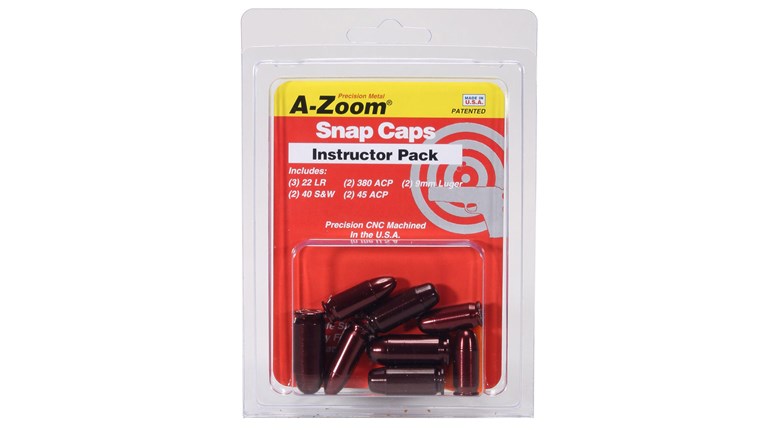
According to the “NRA Firearms Sourcebook,” dry-firing is the releasing of the firing pin on an unloaded chamber of a firearm. It is an inexpensive, safe and time-efficient way to enhance shooting skills for both beginners and advanced shooters alike. Fundamentals can be drilled without the interruption of recoil while improving coordination, draw speed from a holster and getting into and out of various shooting positions safely. Remember to always use a snap-cap or dummy cartridge when dry-firing a rimfire to relieve wear caused by the firing pin.
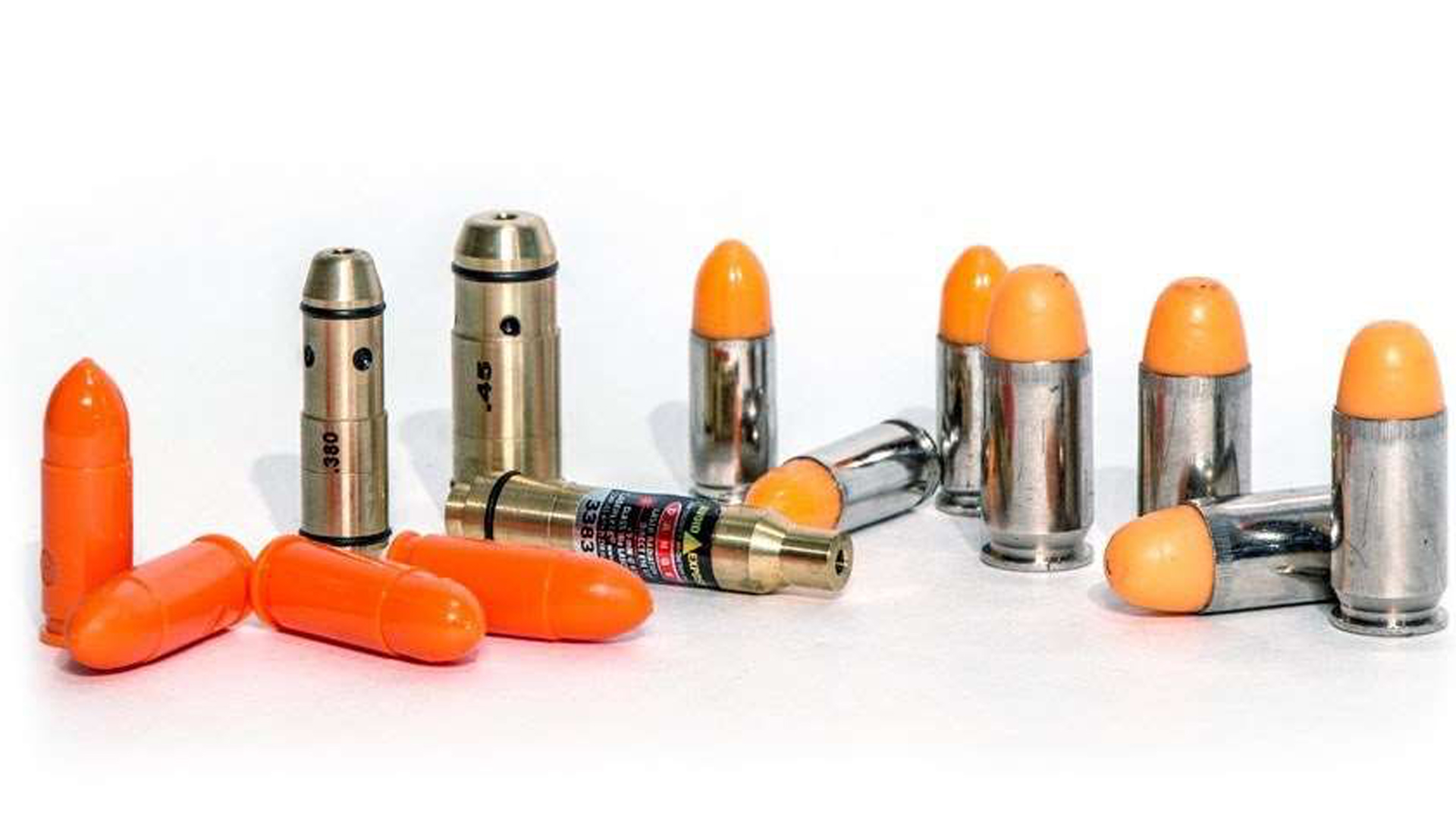
Despite the fact that dry firing does not use live ammunition and will help you build positive habits into your shot process, it is necessary to follow these safety rules.
- The firearm must be unloaded.
- All dry-firing must be done in a dedicated dry-fire area with a safe backstop in the direction the gun is pointed.
- No live ammunition is permitted in the designated dry-fire area.
- Only dummy ammunition is allowed for reloading drills.
- Always wear eye protection.
Even though the gun is unloaded, make it a habit to practice safe firearm handling in keeping the barrel pointed in a safe direction.
Another key thing to remember is that dry-firing isn’t only about developing a solid sight picture, it’s also about developing proper trigger control.
If you are interested in adding dry-firing to your pre-competition routine, ask a range official where the designated dry-fire area is prior to beginning your warm-up. This is important for the safety of all competitors and match officials.
The more you practice dry firing, the more you will improve. Dry-firing will help you with muscle memory, as long as you do it correctly. Not only that, it will help develop muscle tone, target reaction speed and a steady hold. For handguns, dry-fire practice will help improve draw speed, presentation speed, sight alignment, trigger function, reloading drills, stoppage clearing drills, movement to targets (in some disciplines) and holstering. As for shotgun shooters, dry-firing will help with a correct mount, smooth gun movement, target alignment and leads, trigger control and timing.
By continuing to hone your skills through repetition, you will see improvement. Be sure to practice dry-firing at least five times a week. Your dry-fire sessions only need to be about 15 minutes long each day, or even longer, if you remain productive during practice.
Here’s how one champion NRA bullseye pistol shooter, Dave Lange, does his dry-fire practice.
“When I dry fire, I start with the muzzle about an inch from a blank wall. Not having a target and being close to the wall puts me in a natural point of aim and prevents my eyes from focusing far away. I run a mental program before every shot or string of shots, so I do the same when I dry fire. I do not pull my trigger without first running a mental program, ever. In my mental program, I visualize my red dot in the center of the bull. While I focus on the red dot and squeeze the trigger, I imagine the shot breaking and the bullet going straight through the center of the red dot. Then I imagine a target with a hole in the center of the X-ring and think, ‘... and you’ve got an X.’ I use the same technique for iron sights, except I focus on the front sight instead of the red dot. The whole idea is to focus on the sights and break the shot without disturbing the sight alignment or moving the dot.”
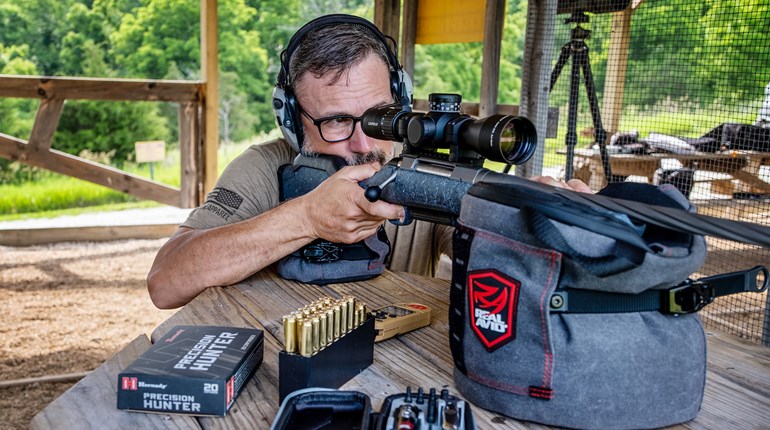
Also worth mentioning is the value of electronic firearms training devices that can enhance dry-fire practice, including products like the Blackbeard AR-15 laser trainer from Mantis. A two-piece unit, the Mantis Blackbeard will aid in dry-fire practice for High Power shooters working on their rapid-fire stages by resetting the trigger, replicating a true semi-automatic action. Another modern tool for dry-fire rifle practice is the SCATT system, which is an electronic trainer that records aimpoint traces. The SCATT MX-W2 wireless model was released in 2019 and now has a companion app.
Send your competitive shooting questions to [email protected].