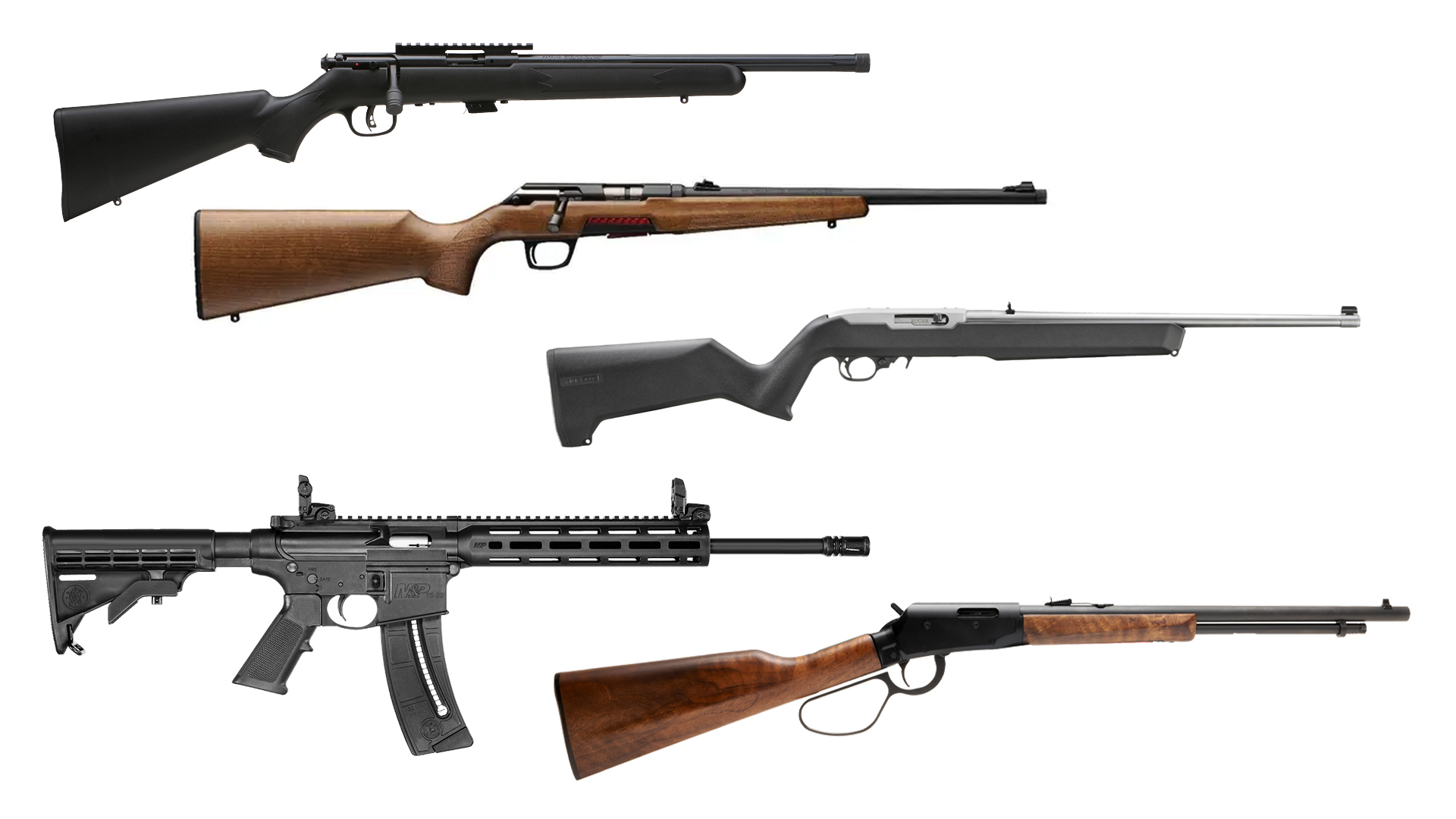
Similar to our previous stage, Roundabout, the Showdown stage (SC-102) is a quick one. The fastest peak time is seven seconds and shared by Rimfire Rifle Open (RFRO) and Pistol Caliber Carbine Open (PCCO). The slowest is 12 seconds for Iron Sight Revolver (ISR).
Target distances are longer than Roundabout, with No. 1 and No. 4 at 25 yards. But those 18x24-inch plates are no more difficult than the smaller and closer No. 1 and No. 4 ones on Roundabout. With a center Stop plate, the visual perspective for the targets is exactly the same—a smooth, horizontal transition with a single reverse transition to the Stop plate.
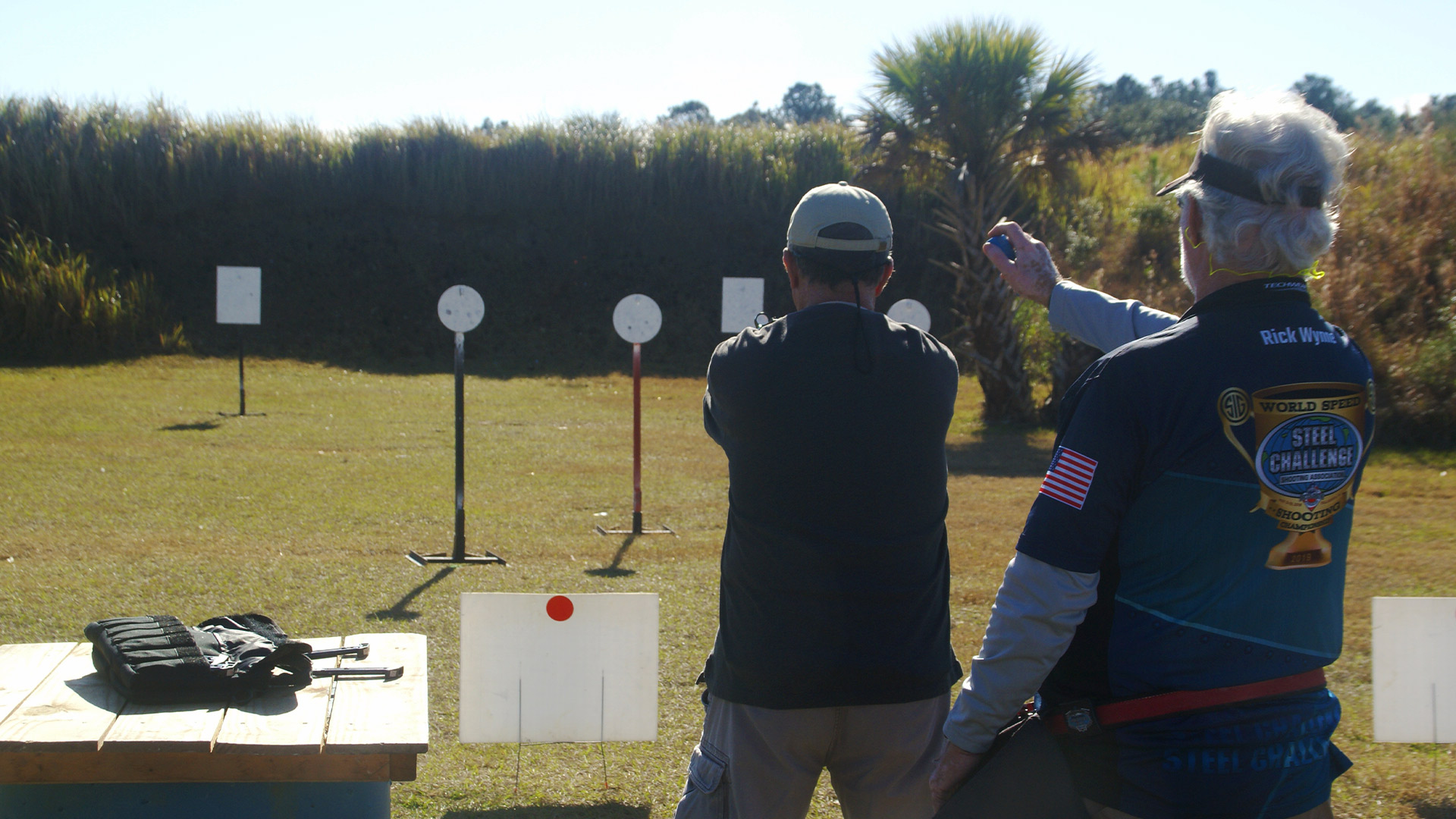
What makes Showdown different is it’s not shot from a center box. Instead, there’s a left-side and right-side box separated by six feet. Five strings are fired with the best four scored. Shooters may start in either box and must fire two strings from that box, with the option to shoot a third string. They then move (off the clock) to the other box to fire the remaining strings.
A shooter’s position in the two different boxes alters their visual appearance of the target numbering order as shown in the rules. From the left-side box, Target No. 4 sits inside of Target No. 3. From that box, most upper-level shooters will run No. 1, No. 2, No. 4, No. 3, Stop. Some shooters choose No. 1, No. 2, No. 3 and pick up No. 4 on the reverse transition to the Stop plate. That can work, but it’s a win-lose. Miss No. 4 and the Stop plate can be hit before shooters realize the miss—especially if they’re running a twosecond time speed.

Shooters who prefer to shoot right to left will have a tough time from the left box, because the initial target acquisition is longer, as are the transitions through the option plates, taking up valuable time. Left to right, reverse to Stop, is the most effective choice from the left side.
The right-side box presents a mirror image of the left-side box. Target No. 4 is now the first target and a smooth right-to-left transition, with a reverse to the Stop plate, is the same target order as the left-to-right approach from the left box.
Shooters will have to switch boxes, and they have the option of shooting two strings from one, and three strings from the other. The key is determining which is your best direction. If one side proves more effective for you, it can save a significant number of those precious hundredths of seconds. In my case, my sub-two-second times have come from the left-side box, often on the first string fired. Sometimes that is immediately followed by my worst time. I can be erratic from the left side. But from the right-side box my times are more consistent, falling into the lower two-second range.

Because of that, my procedure is to start in the left box. If things are “working” I’ll shoot three. If not, I’m onto the right after two. If one side is better for you, there’s no reason not to shoot there.
Determining which is your best side can boost your score.
Be sure to read our past breakdowns of the Five To Go, Speed Option, Smoke & Hope and Roundabout stages. Next month, we’ll review the Accelerator stage. Learn more about Steel Challenge at scsa.org.
Read more: Steel Challenge: Everlasting Race Of Speed