A fiber optic (FO) insert in the front sight blade is one of, if not the, most popular sight options for action pistol competitors. They’re bright, fast to acquire, and now they are a common feature on many factory guns.
Unfortunately, they’re not bullet-proof.
It’s not uncommon to break one during a match, especially if recoil nails you when shooting through a tight port. Even if the FO rod survives match rigors, they can be dulled by age and common cleaning chemicals to the point where the “bright light” no longer shines. Replacing them is easy.

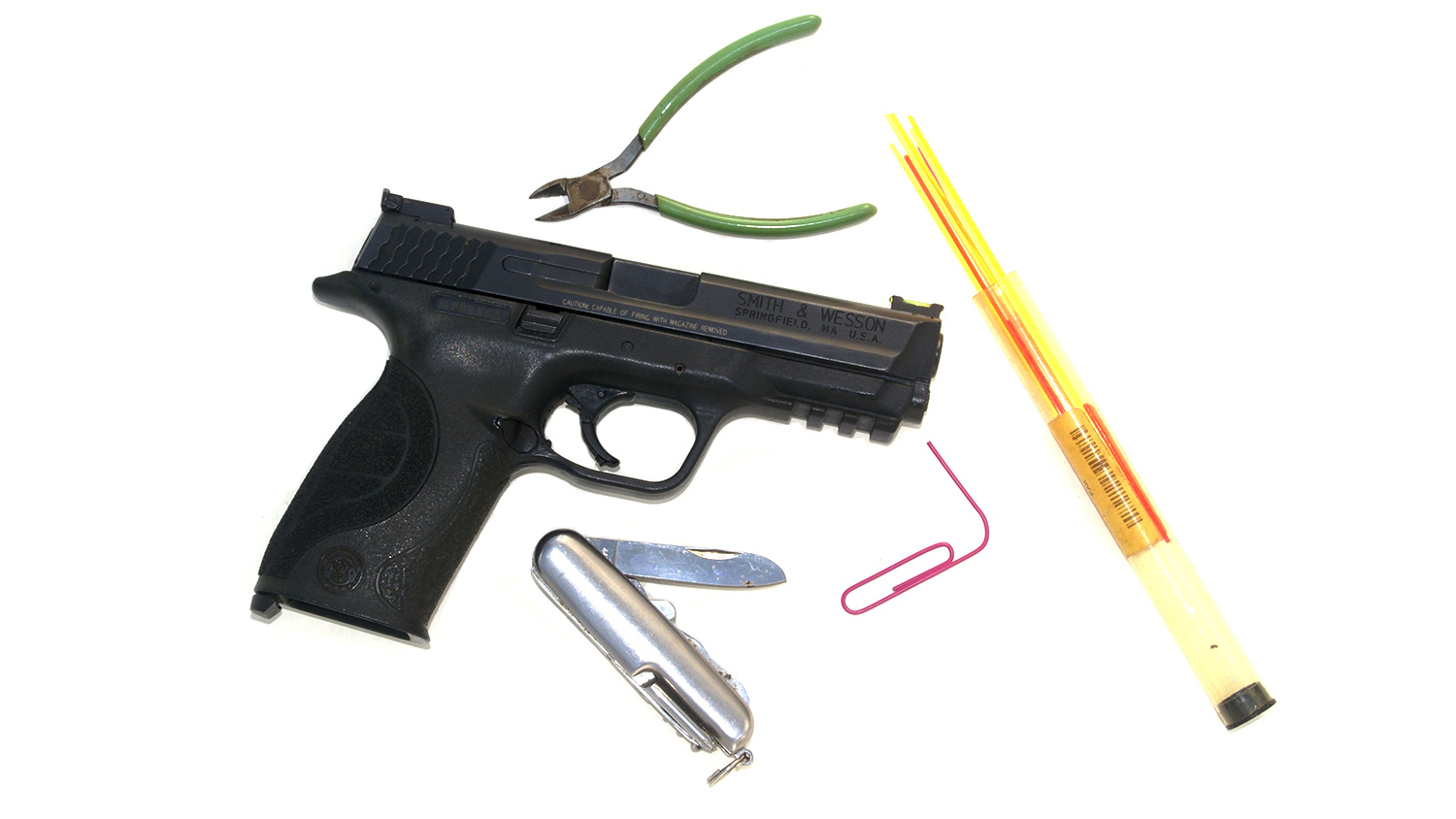
You’ll need replacement rods. The most common sizes are .040 and .060, and you need the correct size for your sight. They’re available from a number of sources (TruGlo, Taran Tactical, Dawson Precision, and others). I use the Fiber Optic Refill Pack from Brownells. It’s a convenient six-inch tube with multiple rods in red, green, or gold.
With the rods you’ll need some basic tools. To remove a rod use a pocket knife blade to push down and separate it into two halves. Push each out of the sight. A straightened paper clip is handy to clear the channel holes. FO rods are sealed with heat, and an inexpensive disposable lighter works well.
With the old rod removed there are two ways to install the replacement.
Some shooters prefer a bold dot, larger than the rod diameter. Insert the rod from the muzzle end of the sight with about 1/32-inch protruding from the sight face. Lift the rod sharply to break it off, and push the rod back into the sight to leave about 1/64-inch on each end. Clamp a thumb over the rod to hold it, point the muzzle straight up and apply heat to melt the rod. Reverse, and melt the face.
If a recessed rod diameter dot is required, insert the rod to 1/64-inch ahead of the sight face, but don’t lift to break it. With the muzzle down, heat the exposed rod as you draw it back into the sight channel. With side cutters or nail clippers, clip the muzzle end and melt that into place.
With basic tools and replacement rods either is a two minute job, whether at home or on the range. There is no reason for a broken or dulled sight to ruin a match.
The Rx for FOs is quick and simple.
Most Popular