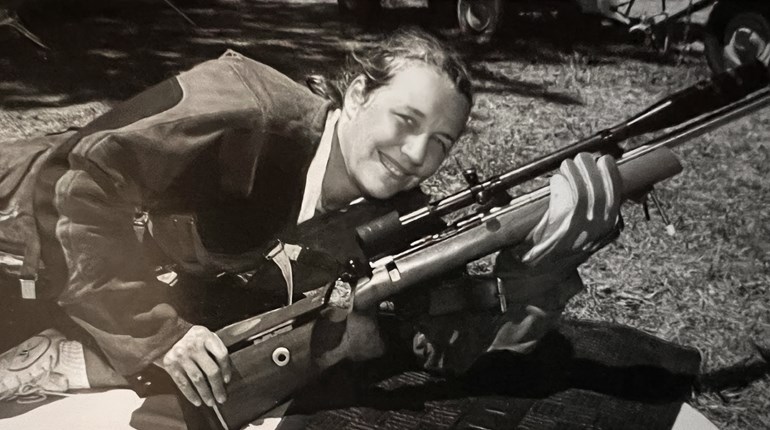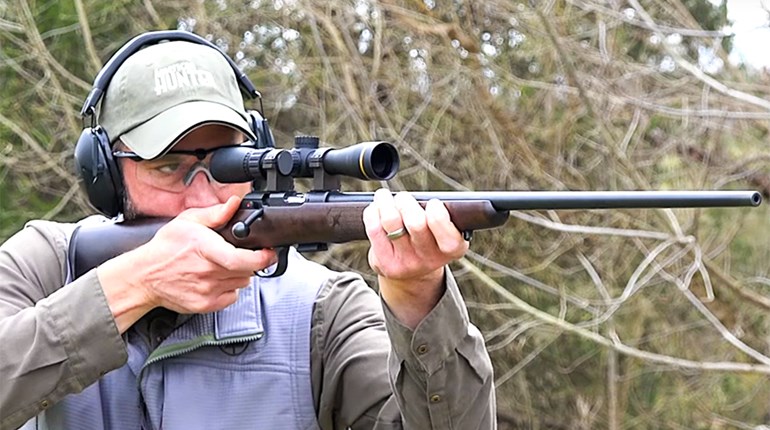
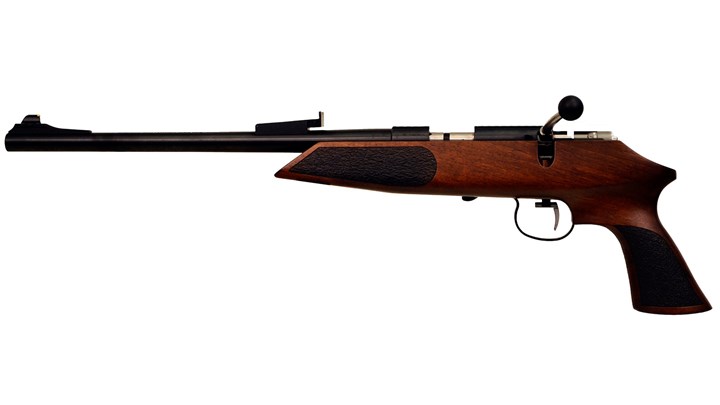
From the vault: The 1984 NRA National Silhouette Championships included clinics that offered participants the most up-to-date silhouette shooting techniques available at the time. The clinic presentations were made by an impressive group of silhouette shooting champions and leaders of the time, including the author of this article, Charlie Davis. Read the below excerpt from his contribution to the program regarding trigger control for Hunter's Pistol shooters.
How do we develop trigger control?
By Charlie Davis
Trigger control is what we call a conditioned reflex. We can compare it to a typist who looks at a paper and types. That person types with a conditioned reflex. He or she doesn't have to think about the fingers or the hand. That's the way you should shoot that pistol. Don't think about trigger control or pulling the trigger.
How do we develop trigger control? We develop it through a lot of practice, a lot of shooting and a lot of dry firing. Dry firing is very important. Practice is very important. That's how you develop trigger control. You delegate the trigger to your subconscious mind and shoot it with your subconscious mind. Whenever you see the sight alignment you want, you should just go off.
Dry firing also help you minimize your arc of movement which is more commonly known as wobble area. None of us holds dead center, but you can cut down on your wobble area by dry firing. You should be able to hold on the animal most of the time. If you can only hold on the animal 60, 70 or 80 percent of the time, that means you only have a 60, 70 or 80 percent chance of hitting it. Come into the target and hold until your wobble area settles and is as small as it's going to get; then shoot. The longer you hold, the bigger your wobble area gets. When you get tired, it deteriorates. When that happens, it's time to come down and start over again.
Use your stopwatch (timer) to your advantage. You don't have to look at it every time you load. Punch it when you start, and after your third round, glance down. You should be right around the middle of the time. That means you have plenty of time to shoot the last two shots. Always try to exhale a few times between each shot to keep your pulse beat down. That's how I pace myself through the five shots. If you do this in a uniform way, you are acting like a stopwatch yourself. You are timing yourself. You know exactly where you stand against the clock. Then, if you run into wind problems, you can use your time to your advantage.
See more: Silhouette Sight Picture Tips
Most Popular