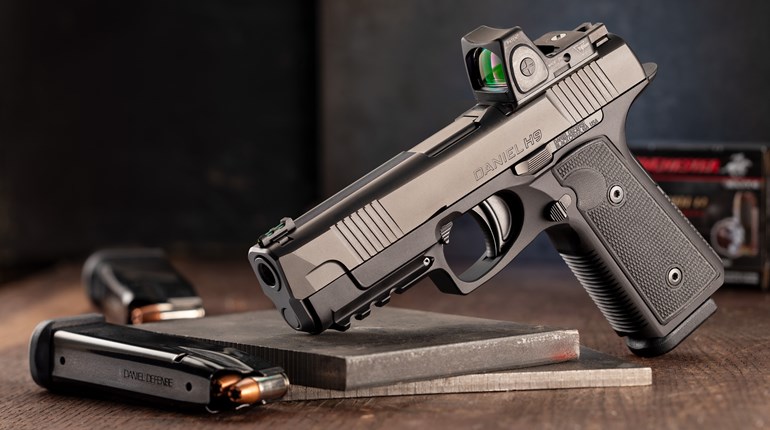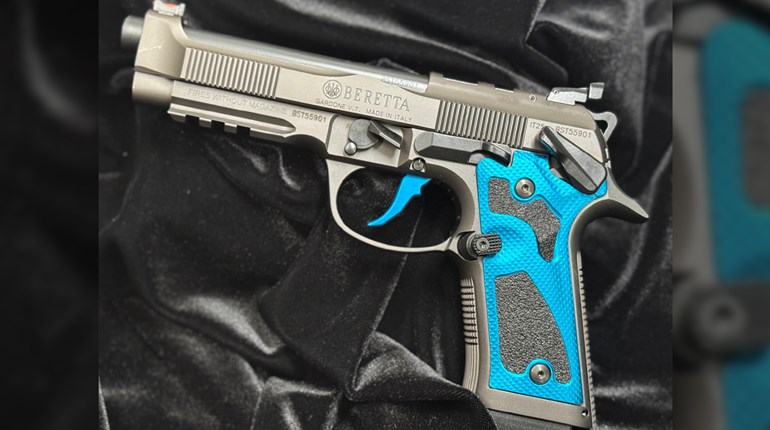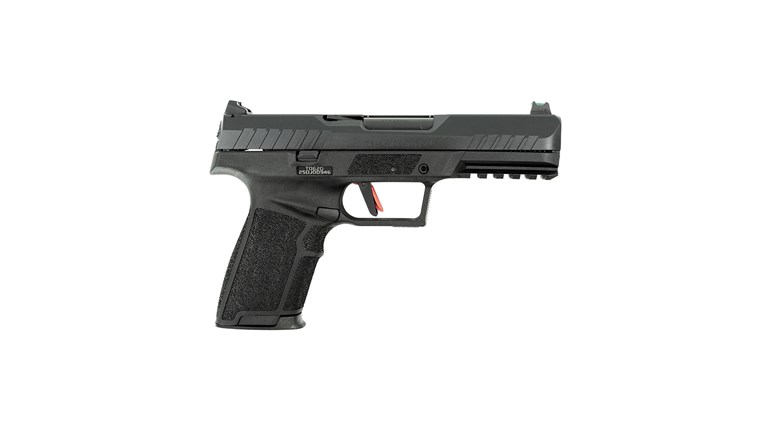

As with single- and double-action revolvers, there are specific techniques for loading single- and double-action semi-automatic pistols.
Loading means filling an empty gun with cartridges. This process involves, first, loading the empty magazine and then inserting the magazine into the gun and feeding a live cartridge into the chamber.
Loading the Semi-Automatic Pistol Magazine
The magazine should be grasped by the fingers of the weak (non-firing) hand, with the top of the magazine facing upward and the front of the magazine oriented toward the firing hand. The firing hand picks up a live cartridge and brings it to the top of the magazine, with the case head facing the magazine and the bullet pointing away from the magazine. The case rim is used to depress the magazine follower slightly, and the cartridge is then slid under the feed lips of the magazine all the way to the rear. The case rim of the next cartridge to be loaded depresses the top cartridge in the magazine, and itself is slid under the magazine feed lips. This process is repeated for each cartridge until the magazine is loaded. Finally, the shooter should slap the rear of the loaded magazine sharply, to ensure that all cartridges are positioned to the rear of the unit, for proper feeding.

Loading Semi-Automatic Pistols
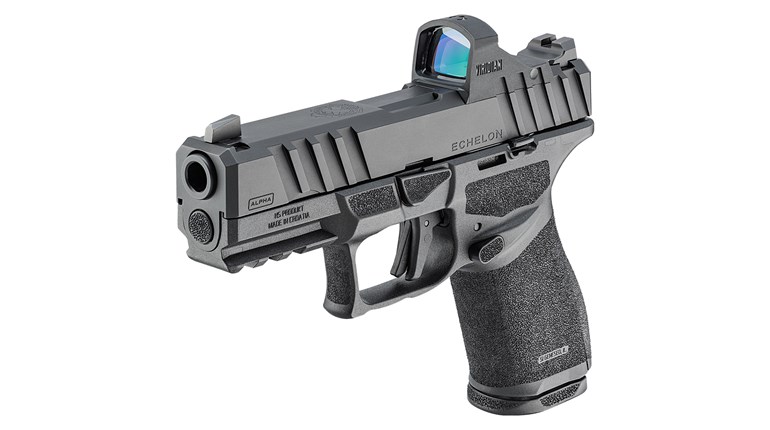
The pistol is grasped with the firing hand, with the trigger finger outside the trigger guard, straight along the frame. With the pistol pointing in a safe direction, the non-firing hand brings the magazine to the magazine well in the butt of the gun, and inserts the magazine fully. The magazine must be inserted in the proper orientation, with the bullets facing forward. Normally, a click is heard when the magazine is fully seated. The shooter may also slap the floorplate or basepad to ensure proper seating.
Next, with the pistol still pointed in a safe direction, and the trigger finger still outside the trigger guard, the non-firing hand grasps the slide and retracts it. There are different ways of grasping the slide; with any method, the hand must stay well clear of the gun's muzzle.
Retracting the slide allows the top cartridge in the magazine to rise to a position where it can be fed into the chamber when the slide goes forward. There are two ways of accomplishing this. One is to retract the slide fully with the weak hand, and then let it fly forward. Alternatively, the slide may be fully retracted with the weak hand until it is locked open by the slide lock. When loading is desired, the slide lock is depressed, releasing the slide. With either procedure, the forward-moving slide will strip the top cartridge from the magazine and chamber it.
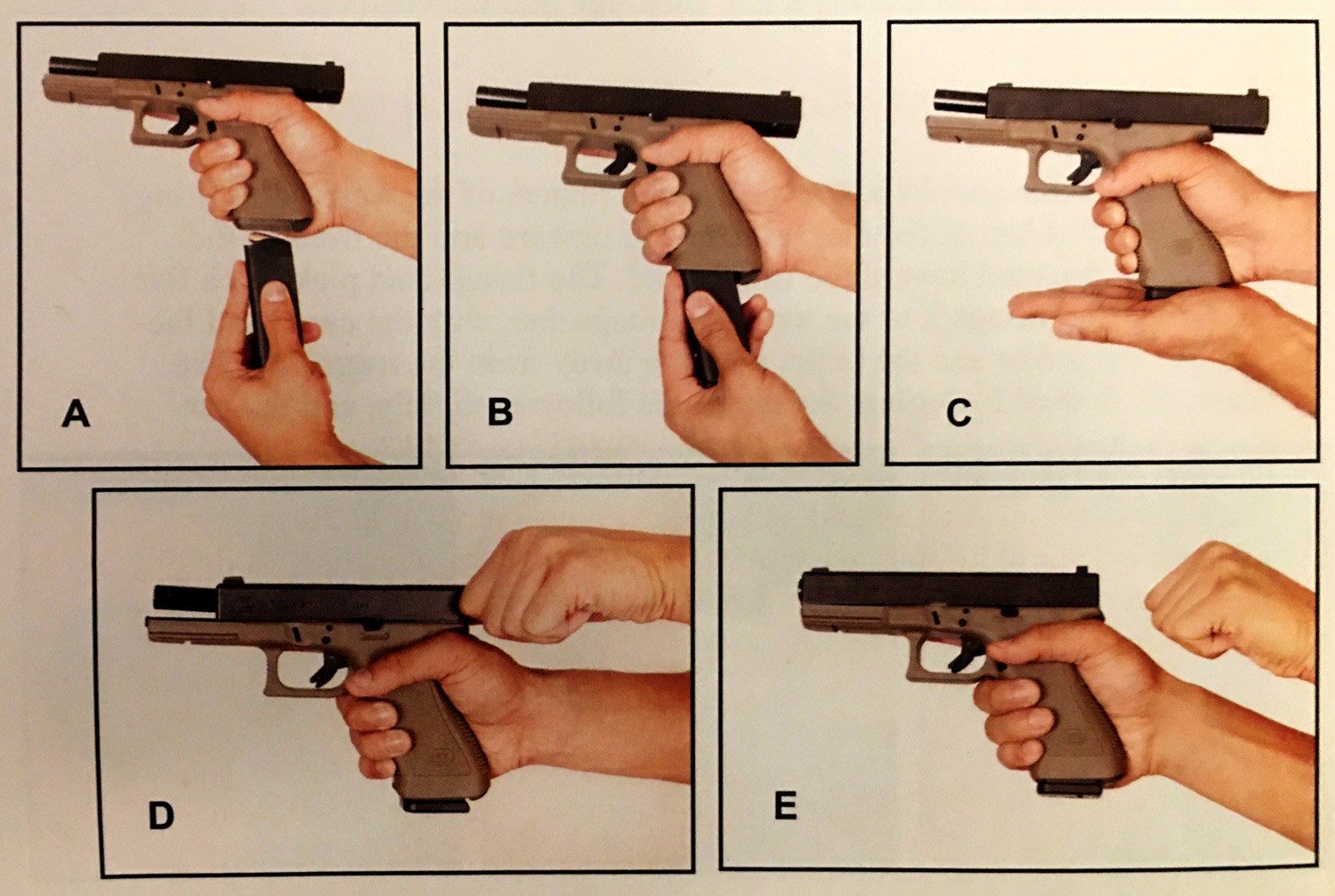
It is critical to avoid following the slide or easing it down with the non-firing hand. Semi-automatic pistols are designed to function best when the slide travels rapidly forward under the pressure of the recoil spring. Easing the slide down is likely to produce feeding malfunctions.
Once a live cartridge has been chambered, the shooter may commence firing. If there is to be a delay in firing, the pistol should be made safe by either engaging the decocker (on a double-action pistol) or the manual safety (on a single-action pistol), normally positioned near the firing-hand thumb. The location of these controls will be found in the owner's manual for the pistol.
While many modern pistols have ambidextrous controls that are equally convenient for right- and left-handed users, some are designed only for right-handed use. Left-handed shooters using such pistols may have to engage the pistol's decocker or safety with the fingers of their non-firing hand, or develop strong-hand techniques for accomplishing this.
It is also worth noting that some semi-automatic pistols, such as double-action-only models, lack either a decocker or a manual safety.

Read more: Precision Pistol’s Jon Shue
Most Popular