WARNING: All technical data in this publication, especially for handloading, reflect the limited experience of individuals using specific tools, products, equipment and components under specific conditions and circumstances not necessarily reported in the article and over which the National Rifle Association (NRA) has no control. The data has not otherwise been tested or verified by the NRA. The NRA, its agents, officers and employees accept no responsibility for the results obtained by persons using such data and disclaim all liability for any consequential injuries or damages.
In today’s handloading article, we offer some cardinal rules to help new gas-gun handloaders with safety and efficiency.
These address both Match Rifle and Service Rifle versions of the AR-15, M1 Garand, M1A, and M110. However, they can also improve safe reloading for many other auto-loaders such as M1 Carbines, FALs, and SIGs etc. The author distilled these principles many years ago to help focus on the essential aspects of these rifles.
Rule 1: Service rifles are not bench rest rifles.
Gas-guns require a relatively loose fit between ammunition and chamber (versus bolt actions) for safe, smooth operation. Many techniques, such as neck sizing and keeping cartridge headspace quite tight, are popular in the extreme bolt gun accuracy realm. However, they are of little value with Service Rifles, and some could even be hazardous. Before adopting a specialized technique, seriously consider whether it is appropriate and beneficial in a gas-gun.
Rule 2: Never compromise safety to obtain accuracy.
Example: if choosing a brand of great, but ultra-sensitive match primers offers possibly better accuracy at the risk of slam-fires in your design of rifle, don’t do it! You are issued exactly two eyes and 10 fingers (best-case scenario). Risking them trying to squeeze 0.25 MOA better accuracy out of an M1A, etc. simply is not worth it.
Rule 3: Tailor the precision you adopt to your individual skill and your rifle’s potential.
If you are struggling to break out of the Marksman class, or using a CMP M1 “as-issued,” then laboriously turning the necks of your 600-yard brass is a waste of time. Your scores will improve much faster by practicing or dry-firing.
On the other hand, if the reigning champions anxiously check your scores each time you fire an event, a little neck-turning might not be so far-fetched.
Accuracy handloading involves a wide variety of techniques, ranging from basic to rather precise. Carefully select those which offer a good return on investment for your time and labor. In doubt? Do a classic pilot study—prepare ammo for at least three or four 10-shot groups with your new technique, vs. the same with your standard ammo. Then, pick a calm day and test the ammo as carefully as possible at its full distance (e.g., 200, 300 or 600 yards) to verify a significant improvement. A little testing can save much labor!

Rule 4: Be your own efficiency expert.
Serious Service Rifle shooters generally think of ammunition in terms of thousands of rounds, not “boxes,” or even “hundreds.” Analyze, and write down each step in your reloading process. Count the number of times each case is handled. Then, see if any operations can be dropped or changed without reducing safety or accuracy. Eliminating just two operations saves 2000 steps per 1000 rounds loaded. Conversely, carefully consider any measurable benefits before adding a step to your routine.
Rule 5: In searching for greater accuracy with efficiency, look for system changes.
For example, instead of marking your 300-yard rounds individually to differentiate them from your 200-yard ammo, would a simple change in primers work? If accuracy is maintained, using brass-colored primers for 200 and silver for 300 provides an indelible indicator and eliminates a step!
Similarly, rather than spending hours selecting GI surplus brass for weight and neck uniformity, consider splurging on some known, high-quality imported match brass for your 600-yard loads. Results should be excellent, time is saved, and given limited shooting at 600 yards, brass life should be long.
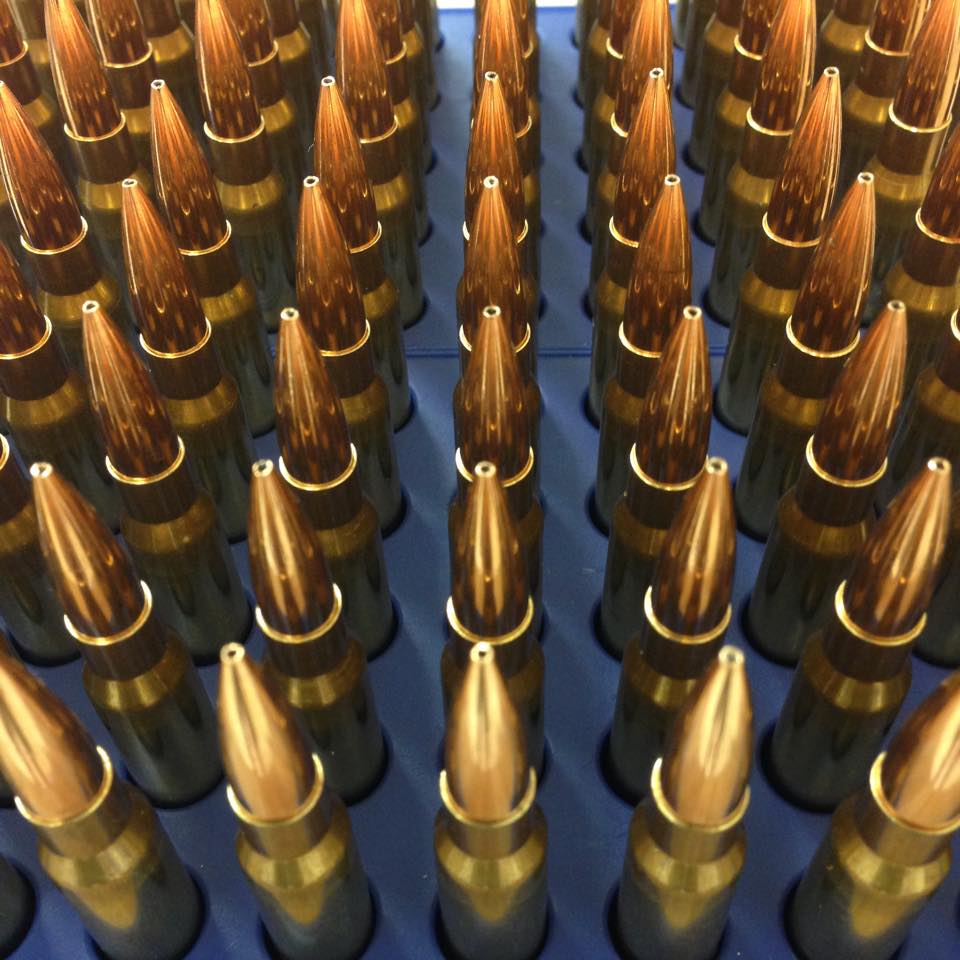
Rule 6: Check all primers before packing ammunition.
This seems simple and even intuitive. However, many slam-fires (which were much more common when M1’s and M1A’s were the standard) are due, at least in part, to “high” primers. Primers should be seated below flush with the case head. Each round should be checked for properly-seated primers before they are packaged for use.
Thanks to the U.S. Army Marksmanship Unit for allowing us to reprint their handloading articles. We hope these tips will be helpful to Service Rifle competitors.
Most Popular